Diagnostic Hysteroscopy

  • Home
  • /
  • Diagnostic Hysteroscopy

Opening Hours

Monday-Saturday

  • Morning
  • 10:00 AM - 4:00 PM
  • Evening
  • 10:00 AM - 4:00 PM
  • Sunday
  • Closed

Diagnostic Hysteroscopy

  • Diagnostic Hysteroscopy

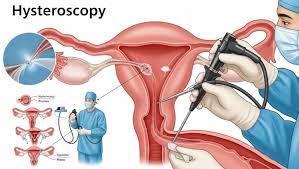
    Diagnostic hysteroscopy is a minimally invasive procedure used to directly visualize the inside of the uterus (uterine cavity). It helps in identifying abnormalities that may not be clearly detected on ultrasound.


    Purpose of Diagnostic Hysteroscopy

    It is performed to evaluate:

  • Abnormal uterine bleeding
  • Infertility
  • Recurrent pregnancy loss
  • Suspected uterine abnormalities (septum, polyps, fibroids)
  • Unexplained findings on ultrasound

  • How the Procedure is Done

  • A thin, lighted instrument (hysteroscope) is gently inserted through the vagina and cervix
  • The uterine cavity is distended using normal saline
  • The doctor directly visualizes the uterine lining on a screen
  • Usually performed as an OPD or day-care procedure

  • Duration

  • Typically takes 15-20 minutes

  • Anesthesia

  • Often done without anesthesia or with minimal analgesia
  • In some cases, short anesthesia may be used

  • Advantages

  • No cuts or stitches
  • Direct and accurate diagnosis
  • Quick procedure with minimal discomfort
  • Can guide further treatment planning

  • What Conditions Can Be Detected

  • Uterine polyps
  • Submucous fibroids
  • Uterine septum or congenital anomalies
  • Adhesions (Asherman’s syndrome)
  • Endometrial abnormalities

  • After the Procedure

  • Mild cramping or spotting for a short duration
  • Most patients can resume normal activities the same day

  • When to Consider Diagnostic Hysteroscopy

  • Persistent abnormal bleeding
  • Difficulty in conceiving
  • Repeated IVF failure
  • Suspicion of intrauterine pathology

  • Conclusion

    Diagnostic hysteroscopy is a safe, quick, and highly effective method for evaluating uterine conditions, helping in accurate diagnosis and better treatment outcomes.