Early Endometrial Cancer Detection
- Home
- /
- Early Endometrial Cancer Detection
What is Endometrial Cancer?
Endometrial cancer is a type of cancer that starts in the inner lining of the uterus (womb). This lining is called the endometrium.
It is one of the most common cancers of the female reproductive system. It mostly affects women and individuals assigned female at birth who have gone through menopause. However, it can happen to younger people too.
The Big Challenge with Current Detection
Right now, there is no simple routine screening test for endometrial cancer (like the Pap smear for cervical cancer).
If a doctor suspects womb cancer, a patient usually has to undergo:
Because these tests are invasive, many people delay going to the doctor until their symptoms become severe.
The Tampon Test: A Breakthrough for Early Endometrial Cancer Detection
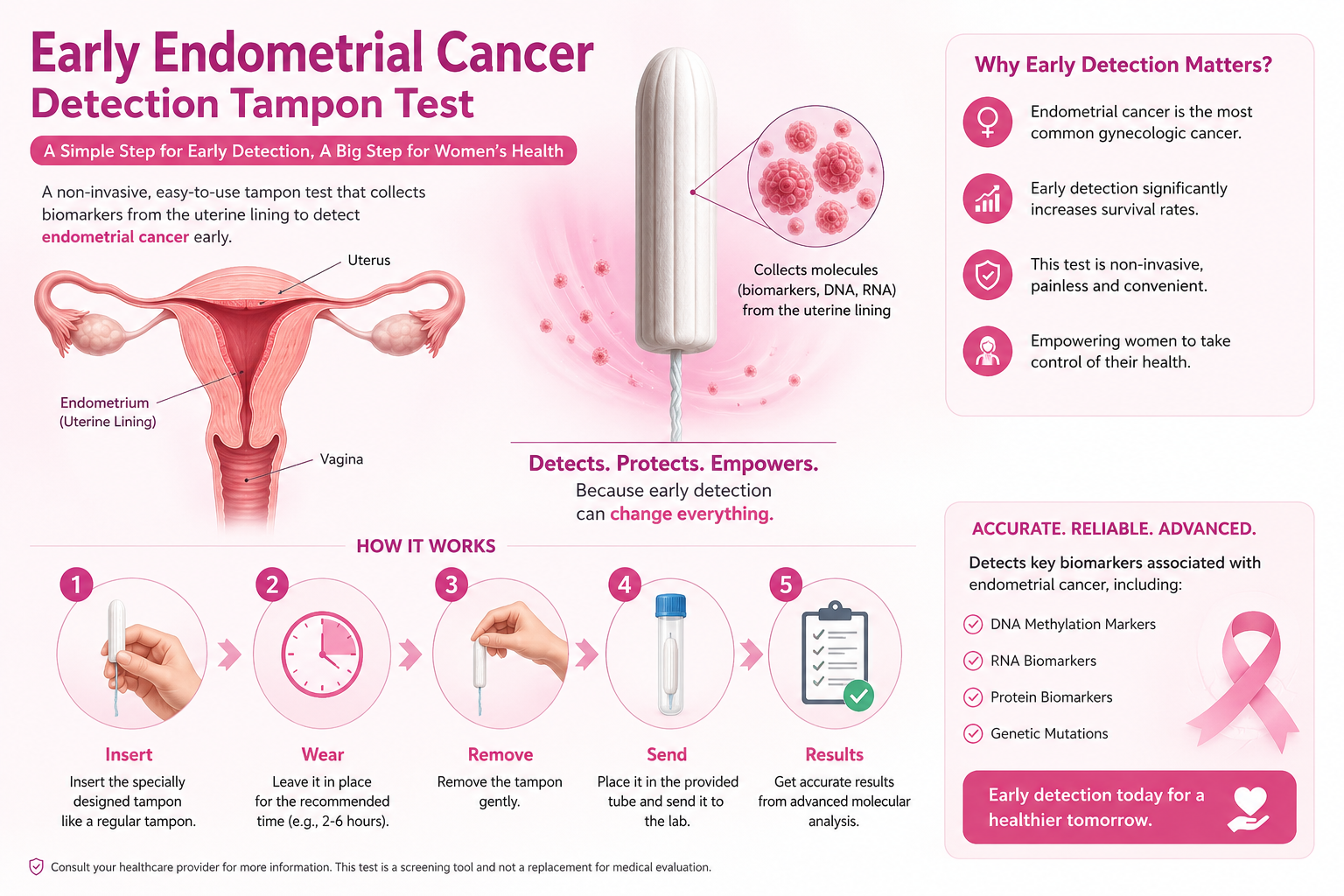
The tampon test is an innovative, non-invasive medical screening method currently in development to detect endometrial (womb) cancer using a standard over-the-counter tampon.
How it Works
Why it Matters
Unlike cervical cancer, which is easily tracked via routine Pap smears, there is no standard screening test for endometrial cancer. Patients with abnormal bleeding typically must undergo an uncomfortable transvaginal ultrasound or a highly painful office biopsy. The tampon test aims to replace these painful procedures with a private, comfortable, and highly accurate at-home alternative to catch womb cancer before it spreads.
The Innovation: How the Tampon Test Works
Medical centers are now testing a non-invasive, painless alternative that you can do at home: using over-the-counter tampons to collect samples.
Here is the simple science behind how it works:
Why is This a Game-Changer?
This new testing method offers massive benefits for patients and hospitals worldwide:
Know the Warning Signs: When to See a Doctor
While this new test is a massive step forward, you must still look out for the primary symptoms of endometrial cancer. Speak to a doctor immediately if you experience:
The Bottom Line
The tampon-based DNA test is a giant leap forward for gynaecology. By turning a painful hospital procedure into a simple, at-home task, it will help doctors catch endometrial cancer early and save countless lives.
Frequently Asked Questions (FAQs)
Q1: Can I buy a tampon test for endometrial cancer right now?
A: Not quite yet. This method is currently in advanced clinical testing and trial phases at major medical centres before it becomes widely available to the public.
Q2: Is postmenopausal bleeding always a sign of cancer?
A: No, it can be caused by less serious issues like thinning of the vaginal lining or benign polyps. However, it is never normal and must always be checked by a doctor.
Q3: What are the main risk factors for endometrial cancer?
A: Key risk factors include obesity, diabetes, taking estrogen-only hormone therapy, never having been pregnant, and older age.




.png)

.png)