Polyendocrine Metabolic Ovarian Syndrome
- Home
- /
- Polyendocrine Metabolic Ovarian Syndrome
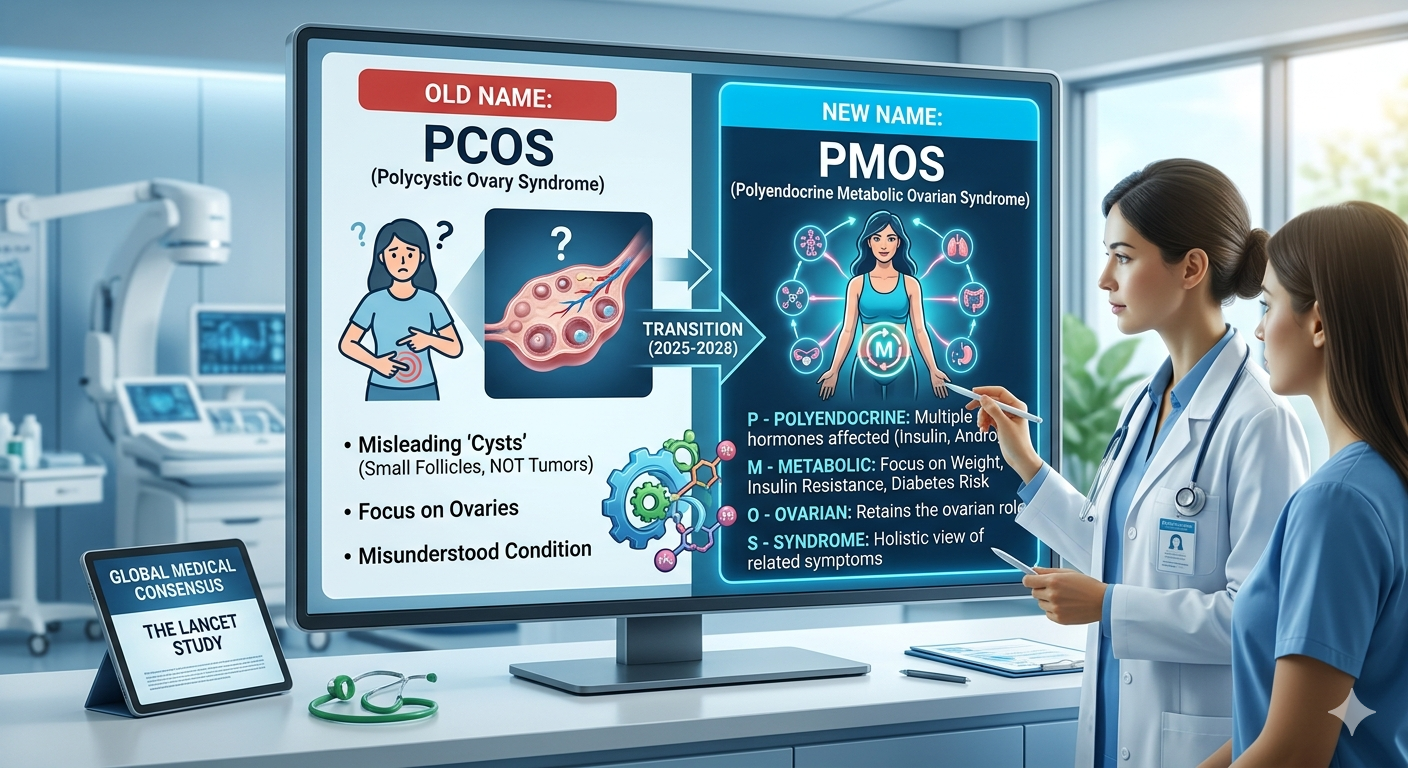
PCOS Renamed to PMOS: Why the Historic Name Change Matters for 170 Million Women
For nearly a century, millions of women experiencing irregular periods, unexpected weight gain, and hormonal imbalances were given a single, specific diagnosis: Polycystic Ovary Syndrome (PCOS). However, a landmark global medical consensus has officially retired this decades-old term.
As reported by medical experts, the condition is officially being renamed Polyendocrine Metabolic Ovarian Syndrome (PMOS).
What is the Full Form of PMOS?
The new term PMOS shifts focus away from an isolated organ and highlights the true systemic nature of the condition. It breaks down as:
Why Was the Name PCOS Changed to PMOS?
A global coalition of 56 leading academic, clinical, and patient organizations analyzed over 14,000 survey responses before reaching this consensus. According to clinical specialists analyzed, the change was driven by two primary flaws in the old name:
1. The Term "Cysts" Was Misleading
The word "polycystic" mistakenly implies that the ovaries are covered in dangerous tumors or painful, physical cysts. In reality, these are simply small, fluid-filled sacs called antral follicles containing immature eggs that failed to release due to hormonal gaps. Many women with the syndrome have zero cysts, which frequently led to missed diagnoses.
2. It Is Far More Than a Reproductive Disorder
Labeling it strictly an "ovary problem" obscured its deep roots in metabolic health. PMOS affects the entire body. It increases long-term risks for cardiovascular disease, metabolic syndrome, and mental health struggles like anxiety and depression.
PCOS vs. PMOS: Key Diagnostic Differences
| Feature | Old Definition (PCOS) | New Framework (PMOS) |
|---|---|---|
| Primary Focus | Ovarian morphology and presence of "cysts". | Multisystem endocrine and metabolic roots. |
| Misconceptions | Tied strictly to female fertility and regular periods. | Recognizes life-long risks like type 2 diabetes and metabolic shifts. |
| Key Indicators | Irregular cycles, hyperandrogenism, polycystic ovaries. | Shifts focus to integrated insulin, androgen, and cardiovascular metrics. |
The Global Timeline: When Will the Name Change Happen?
According to the transition roadmap outlined by the Androgen Excess and PCOS Society, the rollout follows a evolutionary approach:
What This Means for Patients
For the 1 in 8 women affected globally, this update promises faster, more holistic medical care. Healthcare professionals will monitor cardiovascular risks, insulin sensitivity, and nutritional health rather than just writing a prescription to mask reproductive symptoms.
For continuous updates on women's health breakthroughs, check out the specialized medical library at [http://shubhamcare.in].


.png)

.png)