Can Stress Delay Your Period? The Science Behind It
- Home
- /
- Can Stress Delay Your Period? The Science Behind It
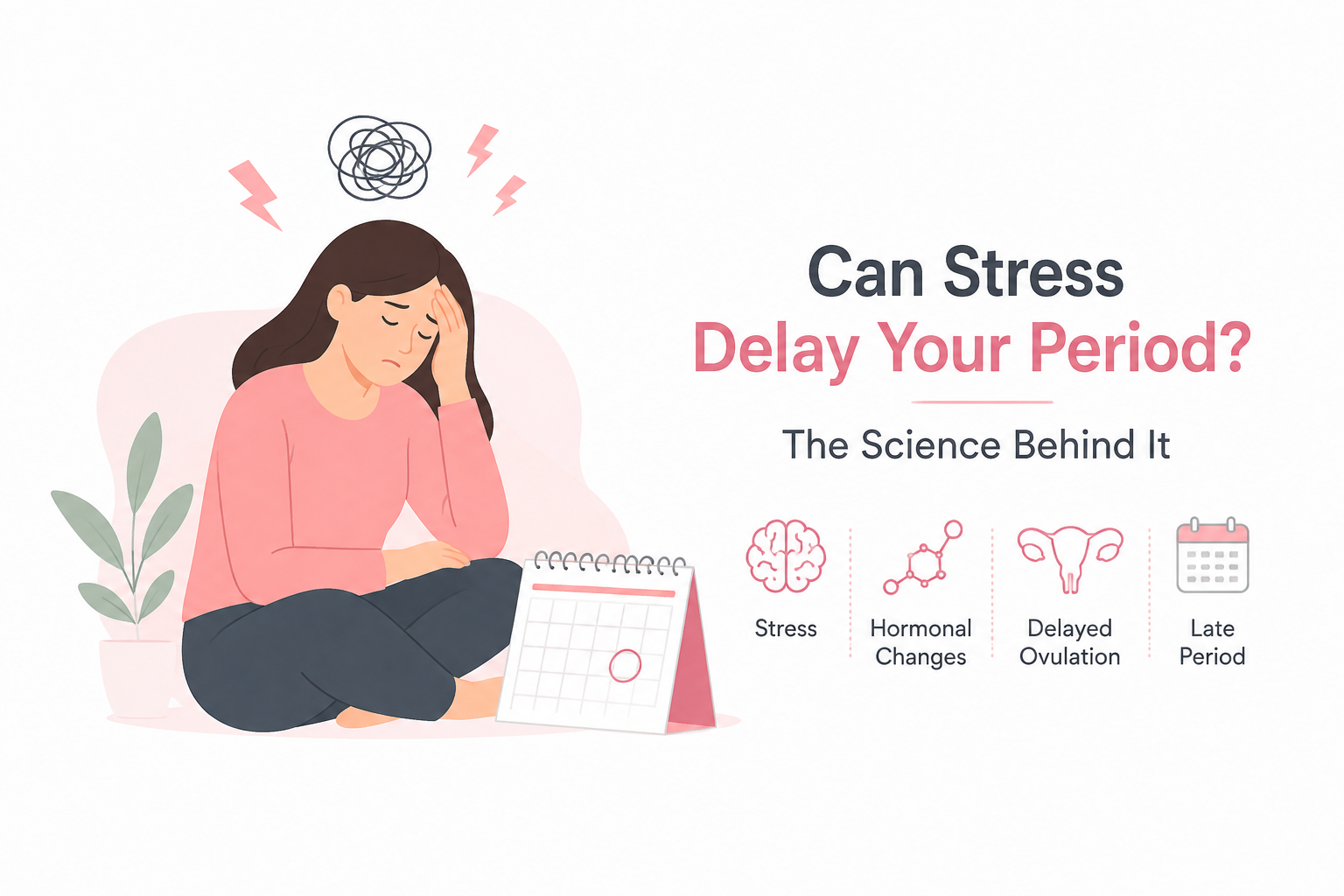
Ever had a late period when it's an unusually hectic month for you? It's not unusual. It can be due to the fact that stress causes late, erratic, light, or even absent periods for some women for one month.
There's a signaling system set up between the hormones, brain and the ovaries which controls you period. If you are put under prolonged stress by way of releasing more stress hormones like cortisol, then it should eventually cause effects on the cycle.
When levels of these hormones go too high and when they are high in this prolonged or extreme stress fashion it can disrupt the hormone that dictates ovulation. It if can disrupt the hormone then ovulation will be late in turn also delaying the onset of your period.
Essentially, Hormonal stress caused to stresshormonelevels, caused to lack of ovulation, causing period to be late.
It’s not only in the emotional sense that stress can affect periods and thus influence its behavior. There are also factors such as:
A slight amount of stress might just upset your period for one cycle. If stress is a continuous problem, then there is an increased risk that your cycles might change drastically.
While the effect stress has on periods varies by person, sometimes the severe or prolonged stress will shut off your hormone signals that cause ovulation. This can leave you with extremely irregular periods or skipped periods.
Do not make any assumptions about a missed period unless there are no others causes to consider.
If you have had sex with an active partner, an active pregnancy should always be on the top of the list of your possible causes for your period being overdue; however, PCOS (polycystic ovary syndrome), problems with your thyroid, loss or gain of a lot of weight, and working too hard at your workouts, as well as other medical conditions, are all considered to be the causes of a missed period. So what exactly should you do when your period is late? If you have been sexually active, one of your first considerations should be a pregnancy test. If a negative test and absence of your period persists for more than the typical cycle of missing 2 periods, then you should look at your lifestyle, including your eating plan, nutrition, sleeping habits, exercise regimen, and managing your stress level.
Habits that may help include: Getting at least eight to nine hours of sleep on an everyday basis; Maintaining routine sleep cycle; Getting more adequate nutrition; Not pursuing extremely strict diet plans; Performing reasonable amounts of exercise.
If you have irregular periods at times and also a good number of times you often tend to miss your periods, have heavy bleeding in your periods, experience terrible pain in the pelvis, hair growth in areas it shouldn’t be,acne, unexplained gains or loss of weight and if you are unable to get pregnant. Your gynecologist can help you figure out if all the excess anxiety you have for these changes is actually the reason behind the alterations.
Final takeaway In Yes, it is true, that at times due to stress your period is delayed but it’s not the only thing that can result in the delay of your periods.
Your menstrual cycle affects your overall well being both physical as well as emotional. The next time rather than focusing on a one or two missing periods in your life try looking for the overall pattern of your menstrual cycle. If there is an irregularity in the menstrual cycle that is frequently occurring don’t push it into ignorance, try knowing all about it.
Your cycle is important, so prioritize your health.
If you are facing unusual or irregular periods frequently, you should immediately consult with your Gynecologist to get thorough and appropriate analysis and care.
Here is the link for best gynecologist -
https://www.shubhamcare.in/blog/why-you-need-a-gynecology-specialist
https://www.shubhamcare.in/blog/pcod-se-jeet-the-desi-pcod-guide-1
stress and periods
stress causing late period
can stress cause irregular periods
stress and menstrual cycle
late period due to stress
stress delay period
why is my period late
delayed period causes
irregular periods causes
hormonal imbalance and stress
stress hormones and menstruation
cortisol and menstrual cycle
anxiety and late period
missed period due to stress
emotional stress and periods
can stress delay your period by a week
how long can stress delay your period
can anxiety cause a late period
why is my period late but pregnancy test is negative
can stress cause you to miss your period
how does stress affect the menstrual cycle
what to do if stress is causing irregular periods
when should I see a gynecologist for a late period
gynecologist in Jaipur
gynecologist in Mansarovar Jaipur
women's health clinic Jaipur
irregular periods treatment Jaipur
menstrual problems treatment Jaipur
gynecologist for hormonal imbalance Jaipur


.png)

.png)