What Happens If Vaginal Infection Is Left Untreated?
- Home
- /
- What Happens If Vaginal Infection Is Left Untreated?

Vaginal infections are common, but that does not mean they should be ignored. Many women notice vaginal itching, burning, unusual discharge, bad vaginal odor, irritation, or pain during sex and wait for the symptoms to disappear on their own. Sometimes symptoms may improve temporarily, but the underlying problem may still be present.
The important thing to understand is that not every vaginal infection is the same. A yeast infection, bacterial vaginosis (BV), trichomoniasis, and sexually transmitted infections (STIs) have different causes and require different treatments. Correct diagnosis is therefore more important than simply taking an over-the-counter medicine.
The vagina normally contains healthy bacteria and other microorganisms that help maintain its natural balance. When this balance changes, or when harmful organisms enter the genital tract, symptoms can develop.
Common causes of vaginal symptoms include:
Yeast infection (vaginal candidiasis)
Bacterial vaginosis (BV)
Trichomoniasis
Certain sexually transmitted infections such as chlamydia and gonorrhea
Hormonal changes, especially around menopause
Irritation from soaps, scented products or vaginal douching
Normal vaginal discharge can be clear to white and usually does not have a strong smell. A noticeable change in colour, consistency, amount or odor can be a sign that something needs attention.
The consequences depend on the type of infection. A simple yeast infection may mainly cause persistent discomfort, while some untreated bacterial or sexually transmitted infections can move beyond the vagina and affect the reproductive organs.
One of the first problems is that the symptoms may continue or become worse.
Untreated vaginal infections can cause:
Persistent vaginal itching
Burning or soreness
Vulvar redness and irritation
Discomfort while urinating
Pain or discomfort during sexual intercourse
Abnormal vaginal discharge
Constant irritation can also affect sleep, concentration, work and daily activities. Vaginal symptoms may also negatively affect sexual comfort and emotional well-being.
A change in vaginal discharge is one of the most common reasons women seek gynecological care.
For example:
Yeast infection:
Often causes intense itching, burning and thick white discharge.
Bacterial vaginosis:
Often causes increased, thin discharge with a noticeable fishy odor.
Trichomoniasis:
May cause increased discharge that can appear yellowish or greenish, along with irritation or burning.
However, discharge alone cannot reliably tell you which infection you have. Testing may be needed to identify the actual cause.
Ignoring symptoms or using the wrong treatment can result in symptoms returning again and again.
For example, recurrent BV is common, and some women experience repeated episodes of vaginal infections. If infections keep coming back, your gynecologist may need to look for contributing factors and consider a longer-term treatment approach.
Repeated vaginal infections are not something you should simply learn to live with.
The cause should be properly evaluated.
This is particularly important with bacterial vaginosis and certain sexually transmitted infections.
CDC guidance notes that BV is associated with an increased risk of acquiring several STIs, including HIV, chlamydia, gonorrhea, trichomoniasis, HPV and HSV-2.
Trichomoniasis itself can increase the risk of acquiring or transmitting other STIs because inflammation can make genital tissues more vulnerable.
This is why persistent or unusual vaginal symptoms should not be dismissed as “just discharge.”
Some sexually transmitted infections, particularly chlamydia and gonorrhea, can spread upward from the cervix and contribute to pelvic inflammatory disease (PID).
PID can affect the uterus, fallopian tubes and surrounding reproductive organs. It may sometimes have mild or even unnoticed symptoms, but it can still cause reproductive complications.
This is one of the most important reasons not to ignore persistent vaginal or genital symptoms.
Untreated STIs can lead to PID. PID can cause inflammation and scarring of the fallopian tubes. This may result in:
Difficulty becoming pregnant
Tubal blockage
Ectopic pregnancy
Chronic pelvic pain
According to CDC patient information, 1 in 8 women with a history of PID experience difficulties getting pregnant.
Not every vaginal infection causes infertility. A simple yeast infection, for example, is not the same as an untreated STI causing PID. The risk depends on the underlying infection and whether it spreads to the upper reproductive tract.
Pregnancy is a time when vaginal symptoms should receive particular attention.
Symptomatic bacterial vaginosis during pregnancy has been associated with adverse pregnancy outcomes including premature rupture of membranes, preterm birth, intra-amniotic infection and postpartum endometritis.
Trichomoniasis during pregnancy has also been associated with adverse outcomes, particularly premature rupture of membranes, preterm delivery and babies who are small for gestational age.
Pregnant women should not self-treat persistent vaginal symptoms without discussing them with their doctor.
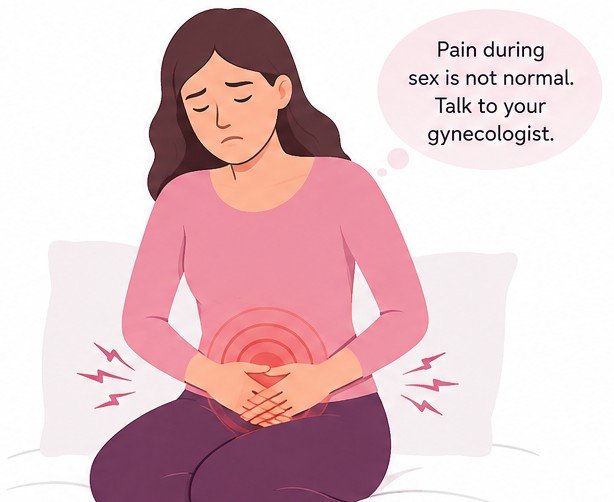
An untreated vaginal infection can make sexual intercourse uncomfortable because of inflammation, burning, irritation or dryness.
If sex has suddenly become painful, especially when combined with abnormal discharge or pelvic pain, it is worth getting evaluated rather than simply ignoring the symptom.
Not every vaginal infection is an STI.
For example, yeast infection and BV are not generally classified as STIs, while trichomoniasis is an STI.
If trichomoniasis or another STI is diagnosed, sexual partners need appropriate testing and treatment to reduce the chance of reinfection.
Sometimes symptoms can improve without treatment, particularly with certain vaginal conditions. But improvement does not always mean the underlying problem has been correctly identified or completely resolved.
The bigger concern is self-diagnosis.
A woman may assume she has a yeast infection and use an antifungal medicine, when the actual problem is BV, trichomoniasis, an STI, a skin condition or another gynecological issue.
ACOG notes that treating the wrong condition can delay the correct diagnosis and treatment.
So, don't treat every vaginal discharge as a yeast infection.
You should consider a gynecological consultation if you have:
Persistent vaginal itching
Burning or irritation
Strong or unusual vaginal odor
Yellow, green, grey or unusual discharge
Thick or abnormal discharge
Pain while urinating
Pain during sex
Lower abdominal or pelvic pain
Vaginal bleeding that is unusual for you
Repeated vaginal infections
Symptoms after unprotected sex
Symptoms during pregnancy
Symptoms that continue after treatment
Seek prompt medical attention if vaginal symptoms are accompanied by significant pelvic pain, fever, feeling very unwell, or abnormal bleeding, because these can indicate a more serious infection or another condition requiring evaluation.
A gynecologist may ask about:
Your symptoms
Duration of symptoms
Vaginal discharge
Menstrual history
Sexual history when relevant
Previous vaginal infections
Recent antibiotic use
Pregnancy status
Other medical conditions
Depending on the symptoms, examination and testing of vaginal discharge may be required. Tests can help distinguish between yeast infection, BV, trichomoniasis and other causes.
Correct diagnosis = correct treatment.
Simple vaginal-care habits can help maintain the natural vaginal environment:
The vagina is naturally self-cleaning. Douching can disturb the normal balance of microorganisms.
Scented sprays, deodorants and other products may irritate the vulvar and vaginal area.
Change out of wet clothes promptly and maintain good external hygiene.
Condom use can reduce the risk of acquiring STIs.
Using the wrong antifungal or antibiotic may delay the correct diagnosis.
If medication is prescribed, follow the treatment exactly as advised. Stopping treatment early because symptoms have improved can allow the problem to return.
Vaginal discharge is not always abnormal. Vaginal odor is not always an infection. And every infection does not cause the same symptoms.
What matters is a new or unusual change from what is normal for you.
Don't feel embarrassed about talking about vaginal itching, discharge, odor, pain or sexual discomfort. These are common gynecological concerns, and early medical evaluation can prevent unnecessary discomfort and, in some cases, more serious reproductive health complications.
If something feels different, listen to your body instead of ignoring the symptoms.
For confirmation of pregnancy, prenatal care, and guidance during early pregnancy, consult an experienced gynecologist.
201, Girraj Nagar, Mansarovar, Jaipur
Map Location Link - https://maps.app.goo.gl/UnRx8VGg7BWeGxtz9
Dr. Shailesh Jain
Senior Obstetrician, Gynecologist & 3D Laparoscopic Surgeon
Phone: 9509438568
At Shubham Care Hospital, we provide pregnancy confirmation tests, ultrasound services, antenatal care, high-risk pregnancy management, and personalized guidance for expecting mothers.
It depends on the cause. Some infections mainly cause persistent discomfort, while certain untreated STIs can progress to PID and potentially cause infertility, ectopic pregnancy or chronic pelvic pain.
A typical yeast infection does not usually cause infertility. However, untreated STIs such as chlamydia or gonorrhea can cause PID, which may damage the fallopian tubes and affect fertility.
Yes. Certain infections, including symptomatic BV and trichomoniasis, are associated with adverse pregnancy outcomes. Pregnant women with unusual vaginal symptoms should consult their obstetrician-gynecologist.
No. Normal vaginal discharge can be clear to white and may change throughout the menstrual cycle. A strong odor or a noticeable change in colour, amount or consistency may indicate a problem.
Some recurrent, previously diagnosed yeast infections may be treated with appropriate over-the-counter medication, but vaginal symptoms can have many causes. If this is your first episode, symptoms are unusual, symptoms persist, or treatment does not work, see a gynecologist.
Don't ignore vaginal itching. Don't normalize persistent discharge. Don't hide unusual odor. And don't keep self-medicating without knowing the cause.
Most vaginal conditions are treatable when correctly diagnosed. The earlier the right problem is identified, the easier it is to manage and the better you can protect your vaginal health, sexual health, reproductive health and pregnancy health.
When in doubt, talk to a gynecologist. There is nothing embarrassing about taking care of your health.
This article is intended for general health education and awareness. It does not replace an examination, diagnosis or individualized treatment from a qualified gynecologist. Persistent, recurrent or severe symptoms should be medically evaluated.


.png)

.png)