High Risk Pregnancy: What is Advised (Complete Guide)
  • Home
  • /
  • High Risk Pregnancy: What is Advised (Complete Guide)

High Risk Pregnancy: What is Advised (Complete Guide)

  12 April 2026
High Risk Pregnancy: What is Advised (Complete Guide)


High Risk Pregnancy: Symptoms, Causes, Treatment & What is Advised (Complete Guide)

Introduction

Pregnancy is usually a smooth journey, but in some cases, extra care is needed. This is called a high risk pregnancy.

A high risk pregnancy does NOT mean something will definitely go wrong.
It simply means that the mother or baby has a higher chance of complications and needs special attention and monitoring.

With the right care, most high risk pregnancies can result in a healthy mother and a healthy baby.

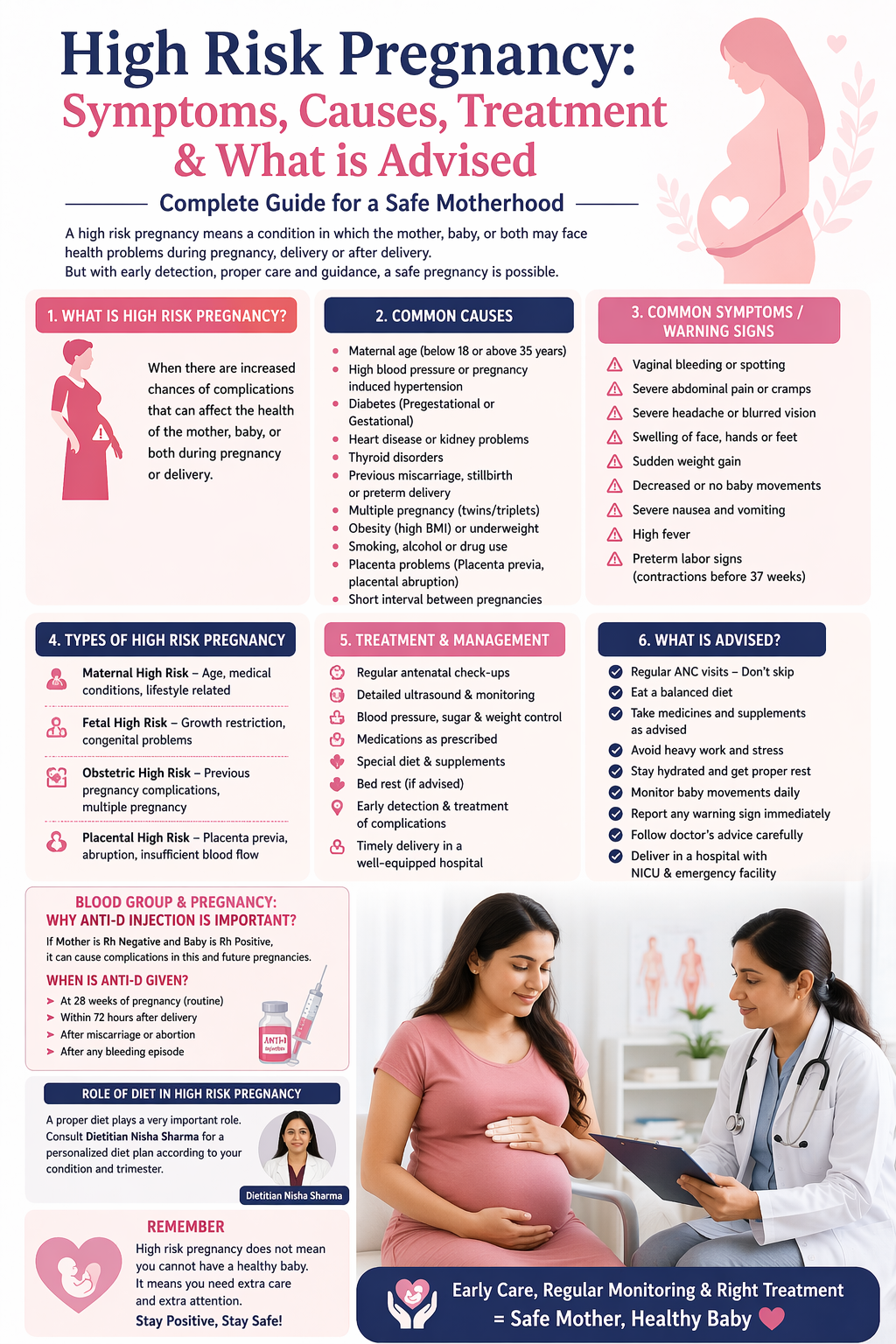
Check Detailed Image Guide  yes

https://www.shubhamcare.in/assets/front/images/High_risk_pregnancy_guide_and_care.png

Here is Detailed Video Link, Must Watch

Part 1 : https://www.instagram.com/reel/DTVAqptj428/?utm_source=ig_web_copy_link&igsh=MzRlODBiNWFlZA==

Part 2 : https://www.instagram.com/reel/DTz2Gf_jzGK/?utm_source=ig_web_copy_link&igsh=MzRlODBiNWFlZA==

Part 3 : https://www.instagram.com/reel/DUIg1phj-58/?utm_source=ig_web_copy_link&igsh=MzRlODBiNWFlZA==


What is High Risk Pregnancy?

A pregnancy is called high risk when:

  • There are medical conditions in the mother
  • There are complications in the current pregnancy
  • There are risks to the baby’s health

These pregnancies require closer monitoring and expert care.


Common Causes of High Risk Pregnancy

1. Maternal Age

  • Below 18 years
  • Above 35 years

2. Medical Conditions

  • High blood pressure (BP)
  • Diabetes (gestational or pre-existing)
  • Thyroid disorders
  • Heart or kidney disease

3. Previous Pregnancy History

  • Miscarriage
  • Stillbirth
  • Preterm delivery

4. Multiple Pregnancy

  • Twins or triplets

5. Lifestyle Factors

  • Smoking
  • Alcohol
  • Obesity or being underweight

6. Placenta-related Problems

  • Placenta previa
  • Placental abruption

 These conditions increase risk and need regular monitoring.


Symptoms & Warning Signs of High Risk Pregnancy

 Do NOT ignore these symptoms:

  • Vaginal bleeding or spotting
  • Severe abdominal pain or cramps
  • Severe headache or blurred vision
  • Swelling in hands, feet, or face
  • Sudden weight gain
  • Decreased baby movements
  • Severe vomiting
  • High fever
  • Early contractions (before 37 weeks)

 Immediate doctor consultation is necessary if any of these occur.


Types of High Risk Pregnancy

1. Maternal High Risk

Due to mother’s age, diseases, or lifestyle.

2. Fetal High Risk

Baby-related problems like:

  • Growth restriction
  • Congenital issues

3. Obstetric High Risk

Due to previous pregnancy complications.

4. Placental High Risk

  • Placenta previa
  • Reduced blood supply to baby

Blood Group & Pregnancy (Rh Factor Importance)

This is a very important but often ignored factor.

If:

  • Mother is Rh negative
  • Baby is Rh positive

 It can cause complications in current or future pregnancies.

Prevention: Anti-D Injection

  • Given at 28 weeks of pregnancy
  • Within 72 hours after delivery (if baby is Rh positive)
  • After miscarriage or bleeding

 This injection protects future pregnancies.


Treatment & Management of High Risk Pregnancy

High risk pregnancy needs extra care, not fear.

1. Regular Check-ups

  • More frequent doctor visits
  • Close monitoring

2. Advanced Monitoring

  • Detailed ultrasound
  • Growth scans
  • Blood tests

3. Control of Medical Conditions

  • BP monitoring
  • Sugar control
  • Thyroid management

4. Medications

  • As prescribed by doctor only

5. Diet & Nutrition

A proper diet plays a key role.

 You can consult Dietitian Nisha Sharma for a customized pregnancy diet plan based on your condition.

6. Bed Rest (if advised)

  • In certain cases like bleeding or preterm risk

7. Planned Delivery

  • Delivery in a well-equipped hospital
  • NICU facility if required

What is Advised in High Risk Pregnancy

✔ Do not miss ANC visits
✔ Eat a balanced and nutritious diet
✔ Take medicines regularly
✔ Avoid heavy work and stress
✔ Drink enough water
✔ Monitor baby movements daily
✔ Report any symptoms immediately
✔ Follow doctor’s advice strictly

 Self-care + doctor care = best outcomes


Role of Diet in High Risk Pregnancy

Diet becomes even more important in high risk cases.

  • High protein intake
  • Iron and calcium rich foods
  • Controlled sugar (in diabetes)
  • Low salt (in BP cases)

 A proper diet can reduce complications significantly.


Conclusion

High risk pregnancy may sound scary, but with early detection, proper monitoring, and timely treatment, most women deliver safely.

 Remember:
“High risk does not mean no hope—it means more care is needed.”

With the right guidance, you can still have a safe pregnancy and a healthy baby ❤️