Laparoscopic Ovarian Cystectomy
- Home
- /
- Laparoscopic Ovarian Cystectomy
(Symptoms, Procedure, Recovery & Expert Advice)
Understand with Image : https://www.shubhamcare.in/assets/front/images/Your_Trust_Our_Care.png
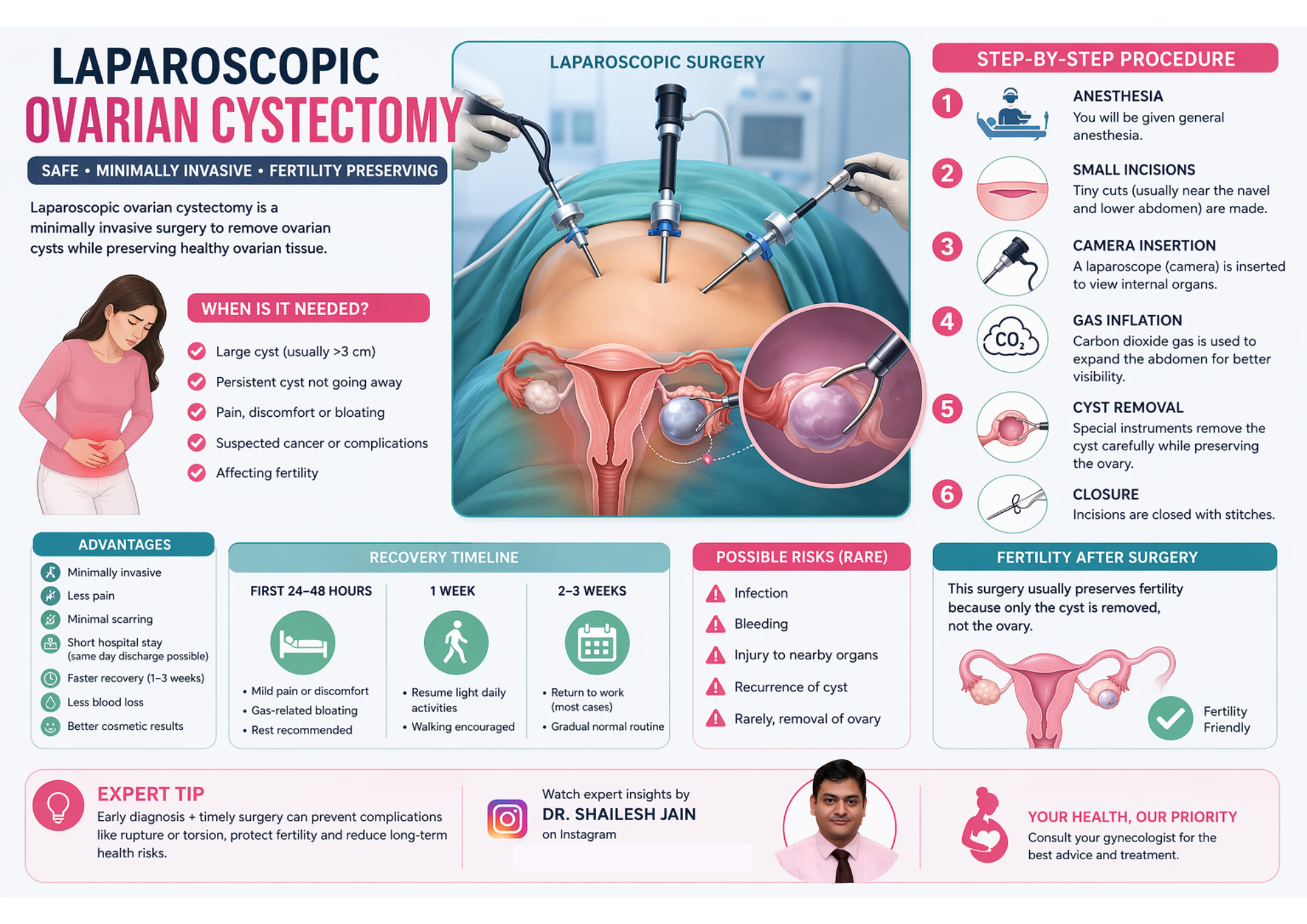
Many women experience ovarian cysts at some point in life. Most cysts are harmless and disappear on their own, but some can grow, cause pain, or affect fertility. In such cases, doctors recommend a safe and advanced procedure called Laparoscopic Ovarian Cystectomy.
Watch expert insights by Dr. Shailesh Jain on Instagram:
https://www.instagram.com/shubhamcarehospital2023/reel/DN8AHUSj7OK/
Laparoscopic ovarian cystectomy is a minimally invasive surgery used to remove cysts from the ovary while preserving healthy ovarian tissue.
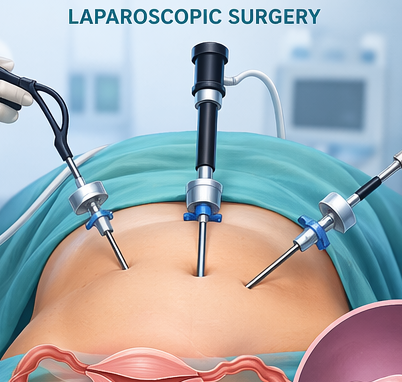
Unlike open surgery, it uses:
This means:
✔ Less pain
✔ Faster recovery
✔ Minimal scarring
Not every cyst needs surgery. Doctors recommend it when:
Patient is given general anesthesia (you’ll be asleep).
Tiny cuts (usually near the navel and lower abdomen) are made.
A laparoscope (camera) is inserted to view internal organs.
Carbon dioxide gas is used to expand the abdomen for better visibility.
Special instruments remove the cyst carefully while preserving the ovary.
Incisions are closed with stitches.
✔ Minimally invasive
✔ Short hospital stay (same day discharge possible)
✔ Faster recovery (1–3 weeks)
✔ Less blood loss
✔ Better cosmetic results
Good news!
This surgery usually preserves fertility because only the cyst is removed, not the ovary.
Early diagnosis + timely surgery can:
For a better understanding, watch Dr. Shailesh Jain’s Instagram video
https://www.instagram.com/shubhamcarehospital2023/reel/DN8AHUSj7OK/
Laparoscopic ovarian cystectomy is a safe, advanced, and fertility-preserving procedure. If you are experiencing symptoms or have been diagnosed with an ovarian cyst, consult a specialist early for the best outcomes.


.png)

.png)