Menopause : Symptoms, Changes & Complete Care

  • Home
  • /
  • Menopause : Symptoms, Changes & Complete Care

Menopause : Symptoms, Changes & Complete Care

  12 April 2026
Menopause : Symptoms, Changes & Complete Care

Menopause: Symptoms, Changes & Complete Care Guide for Women

By Dr. Shailesh Jain

Introduction

Every woman goes through a natural phase called menopause—but for many, it comes with confusion, fear, and unanswered questions.

“Why am I getting hot flashes?”
“Why are my periods stopping?”
“Is this normal?”

The truth is:
Menopause is a natural transition, not a disease.

With the right understanding and care, this phase can be smooth, healthy, and stress-free.

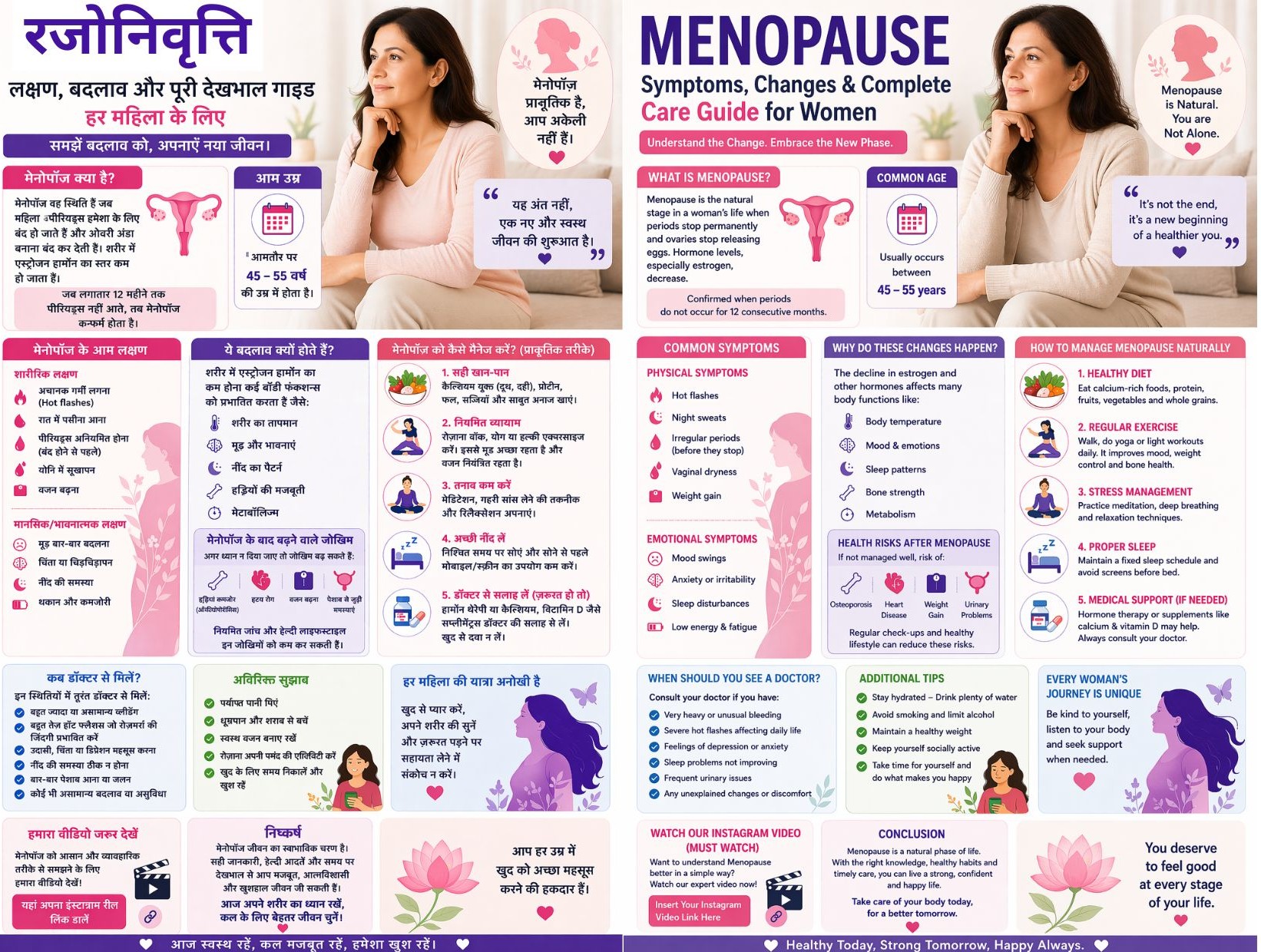
Detailed Image link for Guide

https://www.shubhamcare.in/assets/front/images/menopause_hindi_english.jpg

Watch Our Instagram Video (Must Watch)

 To understand menopause in a simple and practical way, watch our video:

https://www.instagram.com/shubhamcarehospital2023/reel/DQdng3bj1oz/


What is Menopause?

Menopause is the stage when:

  • A woman’s periods stop permanently
  • Ovaries stop releasing eggs
  • Hormone levels (especially estrogen) decrease

 It is confirmed when periods stop for 12 consecutive months.

Common Age:

  • Usually between 45–55 years

Common Symptoms of Menopause

Every woman experiences menopause differently.

Physical Symptoms:

  • Hot flashes (sudden feeling of heat)
  • Night sweats
  • Irregular periods (before stopping)
  • Vaginal dryness
  • Weight gain

Emotional Symptoms:

  • Mood swings
  • Anxiety or irritability
  • Sleep disturbances
  • Low energy

These symptoms are normal but manageable.


Why Do These Changes Happen?

Menopause happens due to a decline in female hormones, especially estrogen.

 This hormonal change affects:

  • Body temperature regulation
  • Mood and sleep
  • Bone strength
  • Metabolism

Health Risks After Menopause

After menopause, women may be at higher risk of:

  • Weak bones (osteoporosis)
  • Heart disease
  • Weight gain
  • Urinary problems

 That’s why proper care after menopause is very important.


How to Manage Menopause Naturally

1. Healthy Diet

  • Calcium-rich foods (milk, curd)
  • Protein (dal, eggs)
  • Fruits & vegetables

 Helps maintain bone strength and energy.


2. Regular Exercise

  • Walking, yoga, light workouts

 Improves mood, weight control, and bone health.


3. Stress Management

  • Meditation
  • Deep breathing
  • Relaxation techniques

 Reduces mood swings and anxiety.


4. Proper Sleep

  • Maintain fixed sleep schedule
  • Avoid screen before bed

 Helps control irritability and fatigue.


5. Medical Support (If Needed)

  • Hormone therapy (if advised)
  • Supplements like calcium & vitamin D

 Always consult your doctor before taking treatment.


When Should You See a Doctor?

 Consult a doctor if:

  • Very heavy or irregular bleeding
  • Severe hot flashes affecting daily life
  • Depression or anxiety
  • Sleep problems not improving

Timely care improves quality of life.