PCOD / PCOS Related Problems: Symptoms, Causes, Treatment

  • Home
  • /
  • PCOD / PCOS Related Problems: Symptoms, Causes, Treatment

PCOD / PCOS Related Problems: Symptoms, Causes, Treatment

  12 April 2026
PCOD / PCOS Related Problems: Symptoms, Causes, Treatment

PCOD / PCOS Related Problems: Symptoms, Causes, Treatment & Complete Care Guide

Introduction

Many women today suffer from irregular periods, weight gain, acne, or difficulty in getting pregnant—but often ignore the root cause.

One of the most common reasons behind these problems is PCOD / PCOS (Polycystic Ovary Disease / Syndrome).

The good news is:
PCOD is common, manageable, and treatable with the right care.

Let’s understand everything step by step in simple language 

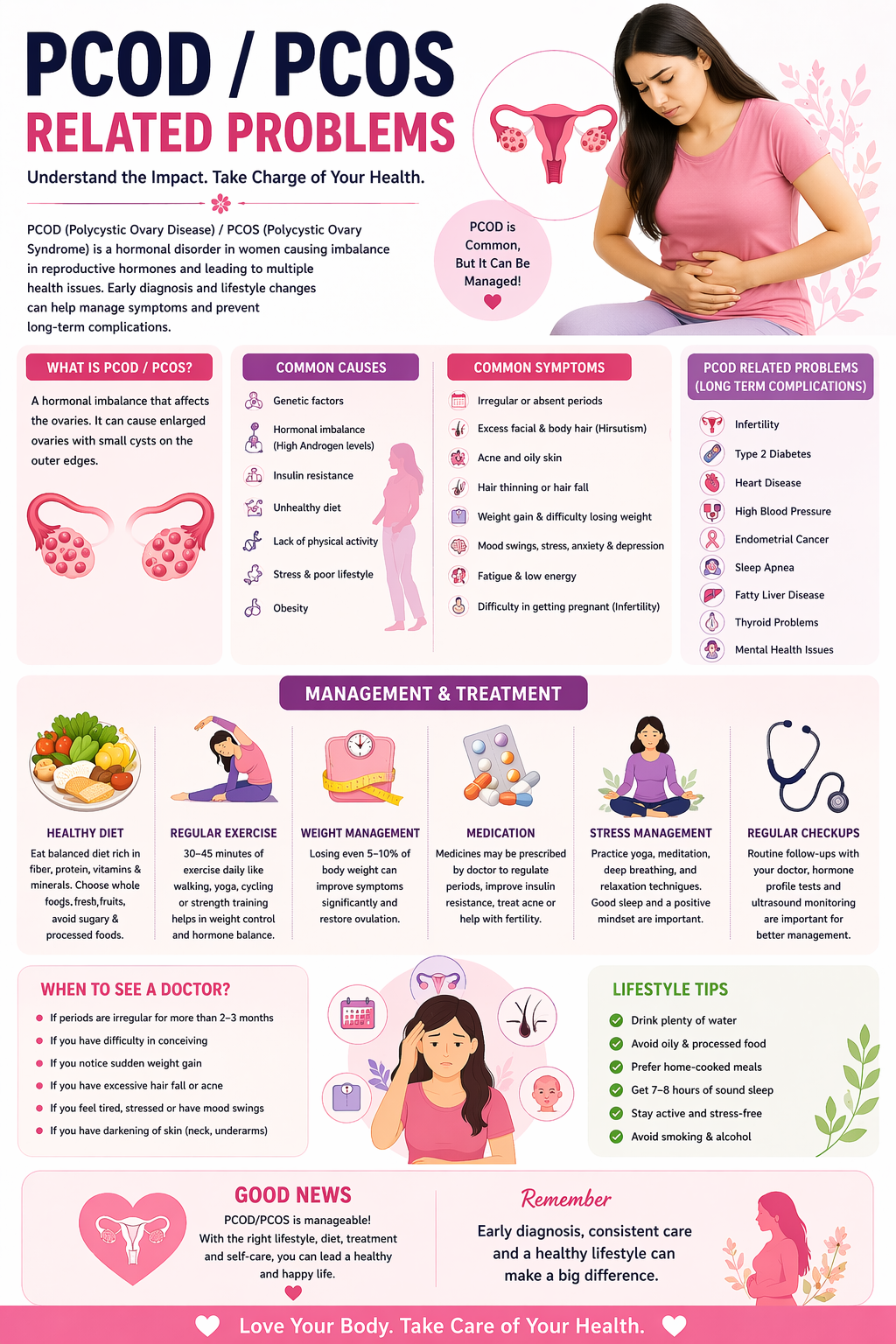
https://www.shubhamcare.in/assets/front/images/PCOD_PCOS.png

Here's Detailed Video Link Must Watch - 

https://www.instagram.com/reel/DXEdGz3j0Bl/?utm_source=ig_web_copy_link&igsh=MzRlODBiNWFlZA==


What is PCOD / PCOS?

PCOD/PCOS is a hormonal imbalance condition in women where:

  • Ovaries may develop small cysts
  • Hormones become imbalanced
  • Ovulation (egg release) gets affected

This leads to multiple health problems if not managed properly.


Common Causes of PCOD / PCOS

PCOD does not happen due to one reason—it is a combination of factors:

1. Hormonal Imbalance

  • Increased male hormones (androgens)
  • Irregular ovulation

2. Insulin Resistance

  • Body cannot use insulin properly
  • Leads to weight gain and hormonal issues

3. Genetics

  • Family history increases risk

4. Lifestyle Factors

  • Unhealthy diet
  • Lack of exercise
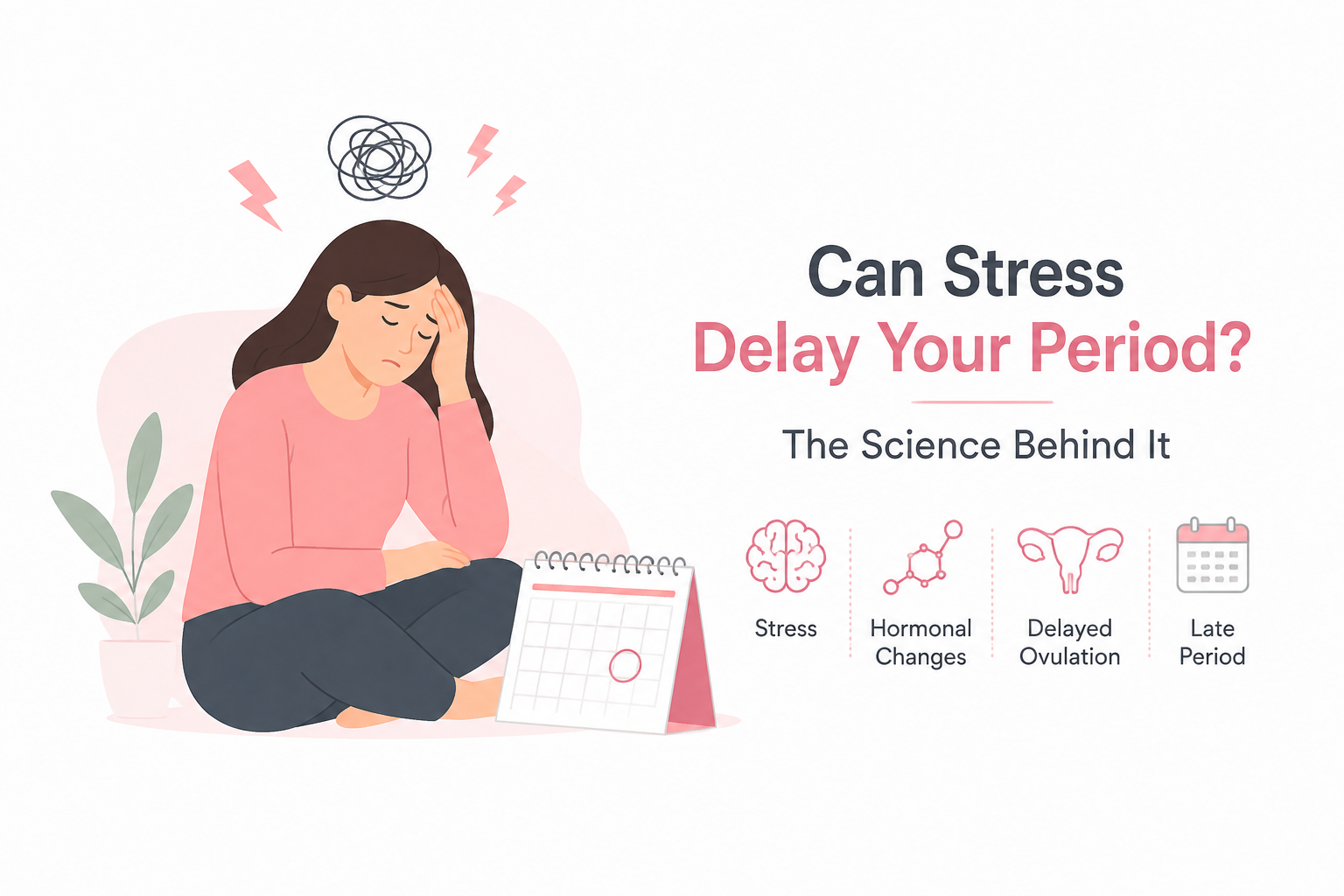
  • Stress
  • Poor sleep

5. Obesity

  • Excess weight worsens hormonal imbalance

Common Symptoms of PCOD

Many women ignore early signs—this delays diagnosis.

Watch for these symptoms:

  • Irregular or missed periods
  • Acne and oily skin
  • Excess facial or body hair (hirsutism)
  • Hair thinning or hair fall
  • Weight gain (especially around abdomen)
  • Mood swings, stress, anxiety
  • Low energy or fatigue
  • Difficulty in getting pregnant

If you notice 2–3 of these, consult a doctor.


PCOD Related Problems (Long-Term Complications)

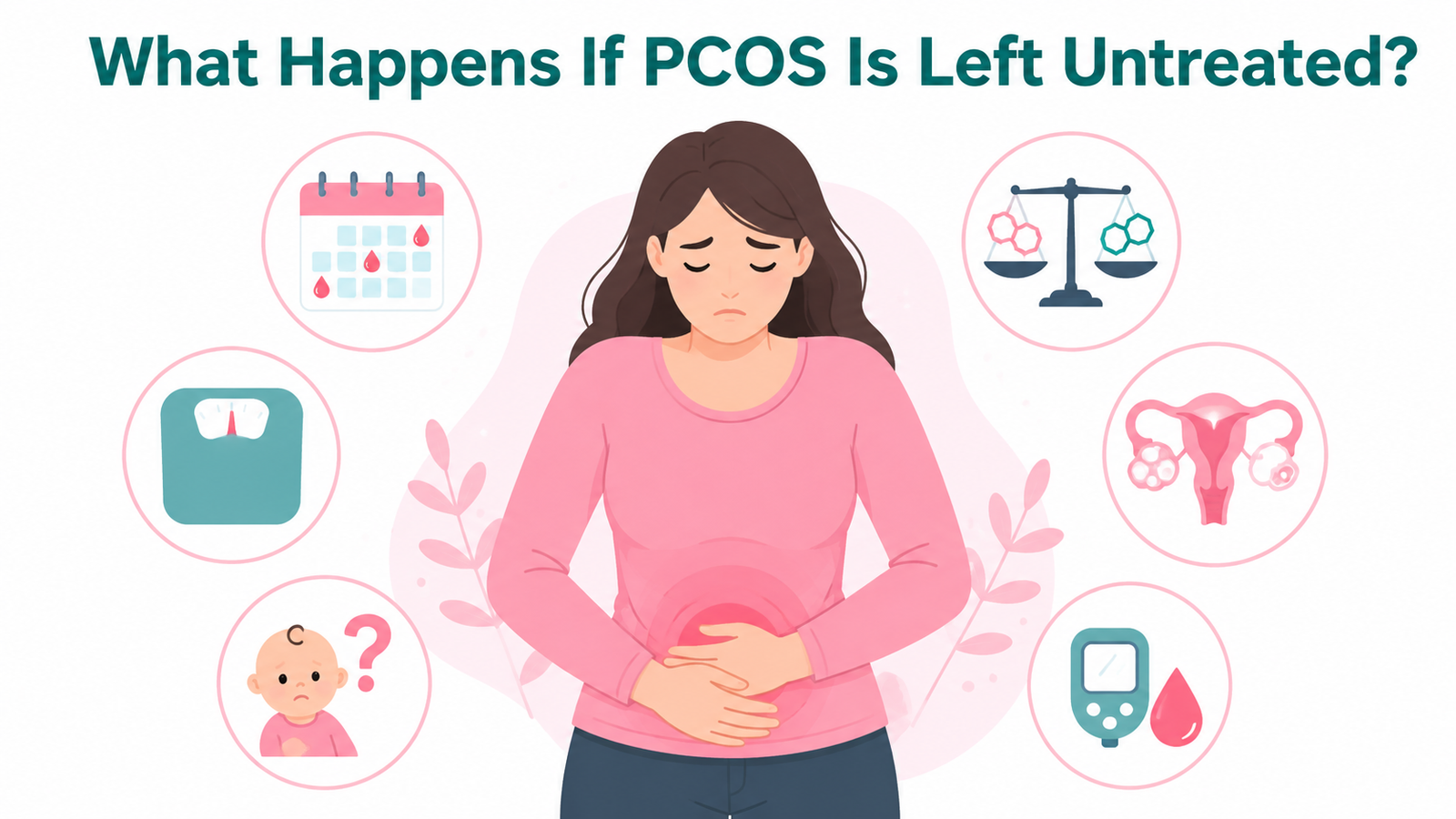
If untreated, PCOD can lead to serious health issues:

  • Infertility (difficulty conceiving)
  • Type 2 Diabetes
  • High blood pressure
  • Heart disease
  • Thyroid disorders
  • Endometrial (uterus) problems
  • Sleep apnea
  • Fatty liver disease
  • Mental health issues (anxiety/depression)

Early treatment prevents long-term complications.


Management & Treatment of PCOD

PCOD treatment is mainly about lifestyle + medical support.

1. Healthy Diet

  • Eat high-fiber foods
  • Include fruits, vegetables, protein
  • Avoid sugar, junk food, processed items

 Diet is the most important pillar.


2. Regular Exercise

  • 30–45 minutes daily
  • Walking, yoga, gym

 Helps in weight control and hormone balance.


3. Weight Management

Even 5–10% weight loss can:

  • Improve periods
  • Restore ovulation
  • Increase chances of pregnancy

4. Medications (If Needed)

Doctors may prescribe:

  • Medicines to regulate periods
  • Hormonal treatment
  • Insulin resistance medicines

 Never take medicines without consultation.


5. Stress Management

  • Meditation
  • Yoga
  • Proper sleep

 Stress directly affects hormones.


6. Regular Check-ups

  • Hormone tests
  • Ultrasound
  • Follow-ups

 Monitoring is very important.


When Should You See a Doctor?

???? Consult a doctor if:

  • Periods are irregular for 2–3 months
  • You are trying to conceive but unable
  • Sudden weight gain
  • Severe acne or hair fall
  • Excess facial hair
  • Mood changes or stress

Early diagnosis = better results.


Lifestyle Tips for PCOD (Simple Daily Habits)

✔ Drink plenty of water
✔ Avoid oily & junk food
✔ Eat home-cooked meals
✔ Sleep 7–8 hours daily
✔ Stay active
✔ Avoid smoking & alcohol


Good News 

PCOD is manageable!

With:

  • Proper diet
  • Regular exercise
  • Medical guidance

You can live a completely normal, healthy, and happy life.


Conclusion

PCOD is not a disease to fear—it is a condition to manage.

 Remember:
“Early diagnosis + Lifestyle changes = Complete control over PCOD”

Take care of your body today for a better tomorrow