Tube Blockage in Women : Diagnosis & Treatment
- Home
- /
- Tube Blockage in Women : Diagnosis & Treatment
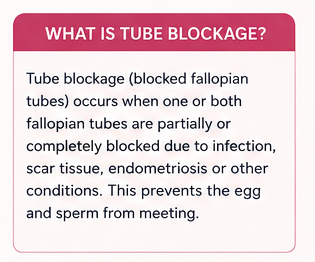
For a woman to conceive naturally, the egg released from the ovary must travel through the fallopian tube, where it meets the sperm and fertilization occurs. The fertilized egg then moves into the uterus for implantation.
When one or both fallopian tubes become blocked, this process is disrupted, making it difficult or impossible for pregnancy to occur naturally. Fallopian tube blockage is one of the most common causes of female infertility and accounts for nearly 25-35% of infertility cases worldwide.
Early diagnosis and proper treatment can significantly improve the chances of conception.
A fallopian tube blockage occurs when one or both fallopian tubes are partially or completely obstructed, preventing the egg and sperm from meeting.
The blockage may occur at:
A woman may have:
✅ One blocked tube (Unilateral Blockage)
✅ Both tubes blocked (Bilateral Blockage)
Women with one healthy open tube can still conceive naturally, while blockage in both tubes usually requires medical treatment or assisted reproductive techniques.
The fallopian tubes play a vital role in reproduction because they:
If the tubes are blocked, fertilization may not occur or the embryo may become trapped, increasing the risk of ectopic pregnancy.
Several medical conditions can damage or block the fallopian tubes.
PID is one of the leading causes of tubal blockage.
It often results from untreated sexually transmitted infections such as:
These infections can cause inflammation and scarring within the tubes.
In women with endometriosis, tissue similar to the uterine lining grows outside the uterus.
This can lead to:
Surgeries involving:
may lead to scar tissue formation around the fallopian tubes.
In countries like India, genital tuberculosis remains an important cause of infertility and tubal damage.
It may silently affect reproductive organs without obvious symptoms.
A previous ectopic pregnancy can damage the affected tube and increase the risk of future blockage.
Some women are born with abnormalities in their reproductive tract that affect tubal function.
A condition where the fallopian tube becomes swollen and filled with fluid.
Hydrosalpinx can:
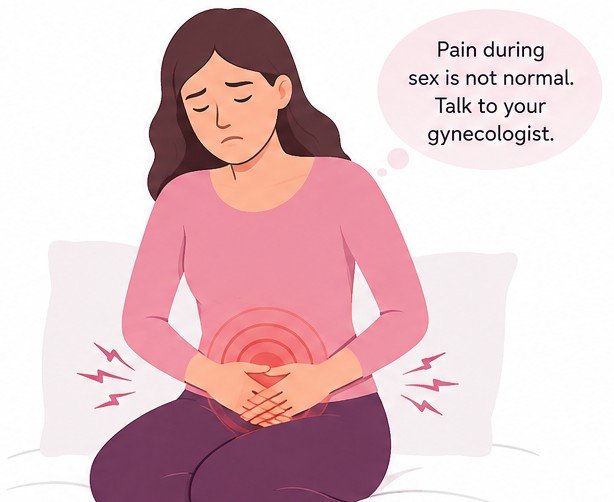
Many women experience no symptoms until they face difficulty conceiving.
Possible symptoms include:
Yes.
Natural pregnancy is possible if:
Natural conception becomes extremely difficult because sperm and egg cannot meet.
Treatment options such as IVF are often recommended.
HSG is the most commonly used test.
A special dye is injected into the uterus and X-rays are taken to determine whether the dye passes through the tubes.
Advantages:
A specialized ultrasound test used to evaluate whether the tubes are open.
Considered the gold standard for diagnosis.
A small camera is inserted through the abdomen to directly visualize:
Used to evaluate the uterine cavity and the opening of the tubes inside the uterus.
Treatment depends on:
Minimally invasive surgery can remove:
Benefits:
For blockage near the uterus, a tiny catheter may be used to reopen the tube.
This procedure is effective in selected patients.
Management may include:
IVF bypasses the fallopian tubes completely.
It is often recommended when:
IVF provides one of the highest pregnancy success rates for women with tubal factor infertility.
Hydrosalpinx occurs when a blocked tube fills with fluid.
This fluid can:
In many cases, doctors recommend treating or removing the affected tube before IVF.
While not all cases are preventable, women can reduce their risk by:
You should seek medical advice if:
Early evaluation can identify tubal problems and improve treatment outcomes.
Fallopian tube blockage is a common but treatable cause of female infertility. Since many women do not experience symptoms, diagnosis often occurs during fertility evaluation. Modern diagnostic tools such as HSG and laparoscopy help identify the problem accurately, while treatments ranging from laparoscopic surgery to IVF offer excellent chances of pregnancy.
If you are struggling to conceive or have symptoms suggestive of tubal disease, consult an experienced gynecologist for timely diagnosis and personalized treatment.
For comprehensive fertility evaluation, infertility treatment, laparoscopic surgery, and women's healthcare services, consult the experts at Shubham Care Hospital.
Dr. Shailesh Jain
Senior Gynecologist, Infertility & Laparoscopic Specialist
Shubham Care Hospital, 201 Girraj Nagar, Iskcon Road, Mansarovar, Jaipur, Rajasthan 302029
Appointment & Consultation: 95094 38568
Tube Blockage in Women, Fallopian Tube Blockage Treatment, Blocked Fallopian Tubes, Female Infertility Causes, Tubal Factor Infertility, HSG Test for Tube Blockage, Hydrosalpinx Treatment, IVF for Blocked Tubes, Laparoscopy for Infertility, Fertility Treatment Jaipur, Best Gynecologist in Jaipur, Infertility Specialist Jaipur, Tube Blockage Symptoms, Female Fertility Problems, Fallopian Tube Surgery Jaipur.


.png)

.png)