What Happens in Endometriosis That Makes Surgery Necessary?

  • Home
  • /
  • What Happens in Endometriosis That Makes Surgery Necessary?

What Happens in Endometriosis That Makes Surgery Necessary?

  18 June 2026
What Happens in Endometriosis That Makes Surgery Necessary?

What Is Endometriosis?

Endometriosis is a common gynecological condition in which tissue similar to the lining of the uterus (endometrium) grows outside the uterus. These abnormal growths can be found on the ovaries, fallopian tubes, bladder, bowel, and other pelvic organs.

During every menstrual cycle, this tissue responds to hormonal changes just like the uterine lining. It thickens, breaks down, and bleeds, but unlike normal menstrual blood, it has no way to leave the body. This can cause inflammation, severe pain, scar tissue, and fertility problems.

Endometriosis affects millions of women worldwide and is one of the leading causes of chronic pelvic pain and infertility.

What Happens in Endometriosis That Makes Surgery Necessary?

In many women, endometriosis can be managed with medicines and hormonal treatment. However, surgery may be recommended when the disease becomes severe or starts affecting organs and fertility.

Surgery May Be Needed When:

1. Large Endometriotic Cysts (Chocolate Cysts) Develop

  • Endometriosis can form cysts on the ovaries called endometriomas or chocolate cysts.
  • Large cysts may cause severe pain, damage ovarian tissue, and affect fertility.

2. Severe Pelvic Pain Does Not Improve with Medicines

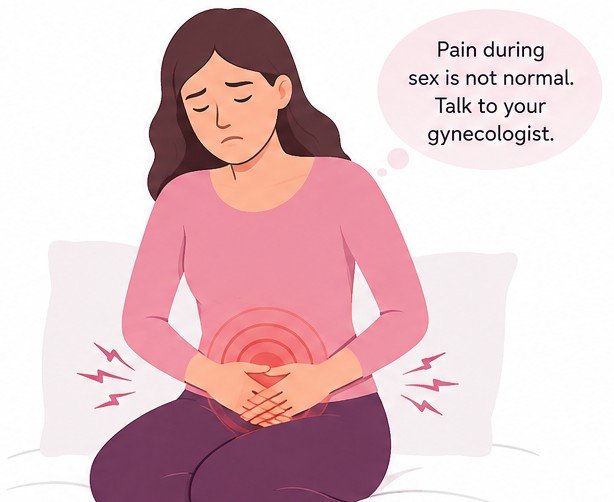
  • Some women continue to experience intense pelvic pain, painful periods, or pain during intercourse despite medical treatment.
  • Surgery can remove the endometriosis tissue causing the pain.

3. Scar Tissue and Adhesions Form

  • Endometriosis can cause inflammation that leads to scar tissue (adhesions).
  • These adhesions may cause pelvic organs such as the ovaries, uterus, bowel, or bladder to stick together, resulting in chronic pain and organ dysfunction.

4. Fertility Problems Occur

  • Endometriosis may block or distort the fallopian tubes.
  • It can affect egg quality, ovulation, and fertilization.
  • Surgery may improve the chances of natural conception in selected patients.

5. Endometriosis Affects Other Organs

  • In severe cases, endometriosis can involve the bowel, bladder, ureters, or other pelvic structures.
  • Surgical treatment may be necessary to prevent complications and relieve symptoms.

6. Suspicion of Advanced Disease

  • When imaging tests show extensive endometriosis or large pelvic masses, surgery may be needed both for diagnosis and treatment.

What Does the Surgery Do?

The most common procedure is laparoscopic surgery (keyhole surgery). During the procedure, the surgeon:

  • Removes or destroys endometriosis implants
  • Removes ovarian cysts
  • Releases adhesions and scar tissue
  • Restores normal pelvic anatomy
  • Helps reduce pain and improve fertility outcomes

Important Point

The severity of pain does not always match the severity of endometriosis. Some women with mild disease experience severe pain, while others with extensive disease may have few symptoms. The decision for surgery is based on symptoms, imaging findings, fertility goals, and overall disease extent—not pain alone.

Why Do Large Endometriotic Cysts (Chocolate Cysts) Form?

Large endometriotic cysts, also called endometriomas or chocolate cysts, develop when endometriosis affects the ovaries.

How Does It Happen?

  1. Endometrial-like tissue grows on the ovary
    • In endometriosis, tissue similar to the uterine lining attaches to the surface of the ovary.
  2. The tissue bleeds during every menstrual cycle
    • Just like the uterine lining, this tissue responds to hormones and bleeds every month.
  3. Blood gets trapped inside the ovary
    • Unlike menstrual blood from the uterus, this blood cannot leave the body.
    • It gradually accumulates inside a sac or cyst.
  4. The cyst keeps growing
    • With repeated monthly bleeding, more old blood collects inside the cyst.
    • The blood becomes thick, dark brown, and resembles melted chocolate.
  5. This is why it is called a "Chocolate Cyst"
    • The cyst contains old, dark blood that has built up over time.

Why Can Chocolate Cysts Become a Problem?

As the cyst grows larger, it may:

✅ Cause severe pelvic pain

✅ Lead to painful periods

✅ Damage healthy ovarian tissue

✅ Reduce ovarian reserve (egg count)

✅ Affect fertility and pregnancy chances

✅ Increase the risk of ovarian torsion (twisting of the ovary)

✅ Rarely rupture and cause sudden severe pain


When Is Surgery Usually Recommended?

A gynecologist may consider surgery when:

  • The cyst is large (often more than 4–5 cm)
  • Pain is severe
  • Fertility is affected
  • The cyst continues to grow
  • There is uncertainty about the diagnosis
  • Medical treatment is not providing relief

Simple Explanation for Patients

"A chocolate cyst forms because endometriosis tissue on the ovary bleeds every month. Since the blood cannot escape, it gets trapped and gradually collects inside the ovary, forming a blood-filled cyst that can grow larger over time and affect pain, ovarian function, and fertility."

Expert Endometriosis Treatment at Shubham Care Hospital, Jaipur

If you are experiencing severe period pain, chronic pelvic pain, infertility, ovarian cysts, or symptoms of endometriosis, early consultation with a gynecology specialist can help prevent complications and improve treatment outcomes.

About Dr. Shailesh Jain

Dr. Shailesh Jain is a Senior Obstetrician & Gynecologist with extensive experience in the diagnosis and treatment of:

Dr. Jain focuses on accurate diagnosis, personalized treatment plans, and advanced minimally invasive surgical procedures to help women achieve better reproductive and overall health.

Shubham Care Hospital

Shubham Care Hospital is a dedicated center for women's healthcare, pregnancy care, infertility management, and gynecological treatments.

Address:
Shubham Care Hospital
201, Girraj Nagar, ISKCON Road, Mansarovar, Jaipur, Rajasthan – 302029

Appointment & Enquiry:
???? +91 95094 38568

Why Choose Shubham Care Hospital?

✔ Advanced Gynecology & Obstetrics Care
✔ Endometriosis Diagnosis & Treatment
✔ Laparoscopic (Keyhole) Surgery Facility
✔ Infertility Evaluation & Counseling
✔ High-Risk Pregnancy Management
✔ Modern Ultrasound & Diagnostic Support
✔ Personalized Women's Healthcare Services
✔ Experienced Gynecology Specialist Team

Book Your Consultation

If you have painful periods, pelvic pain, difficulty conceiving, or ovarian cysts, schedule an appointment with Dr. Shailesh Jain at Shubham Care Hospital, Jaipur for expert evaluation and treatment.

Call Now: +91 95094 38568
  • Endometriosis
  • Chocolate Cysts (Endometriomas)
  • PCOS/PCOD
  • Infertility Evaluation & Treatment
  • High-Risk Pregnancy Care
  • Menstrual Disorders
  • Ovarian Cysts & Fibroids
  • Laparoscopic Gynecological Surgery
  • Women's Preventive Health Checkups
  • Endometriosis Treatment in Jaipur
  • Best Gynecologist in Mansarovar Jaipur
  • Chocolate Cyst Treatment Jaipur
  • Endometriosis Specialist Jaipur
  • Laparoscopic Gynecology Surgery Jaipur
  • Women's Health Clinic Jaipur
  • Infertility Specialist Jaipur
  • PCOS Treatment Jaipur
  • Ovarian Cyst Treatment Jaipur
  • High-Risk Pregnancy Doctor Jaipur
  • Gynecologist Near ISKCON Road Jaipur
  • Shubham Care Hospital Jaipur
  • Dr. Shailesh Jain Gynecologist Jaipur
  • Best OB-GYN in Jaipur
  • Female Infertility Treatment Jaipur